English Centre & Corner Frame
Category: Frames
Introduction
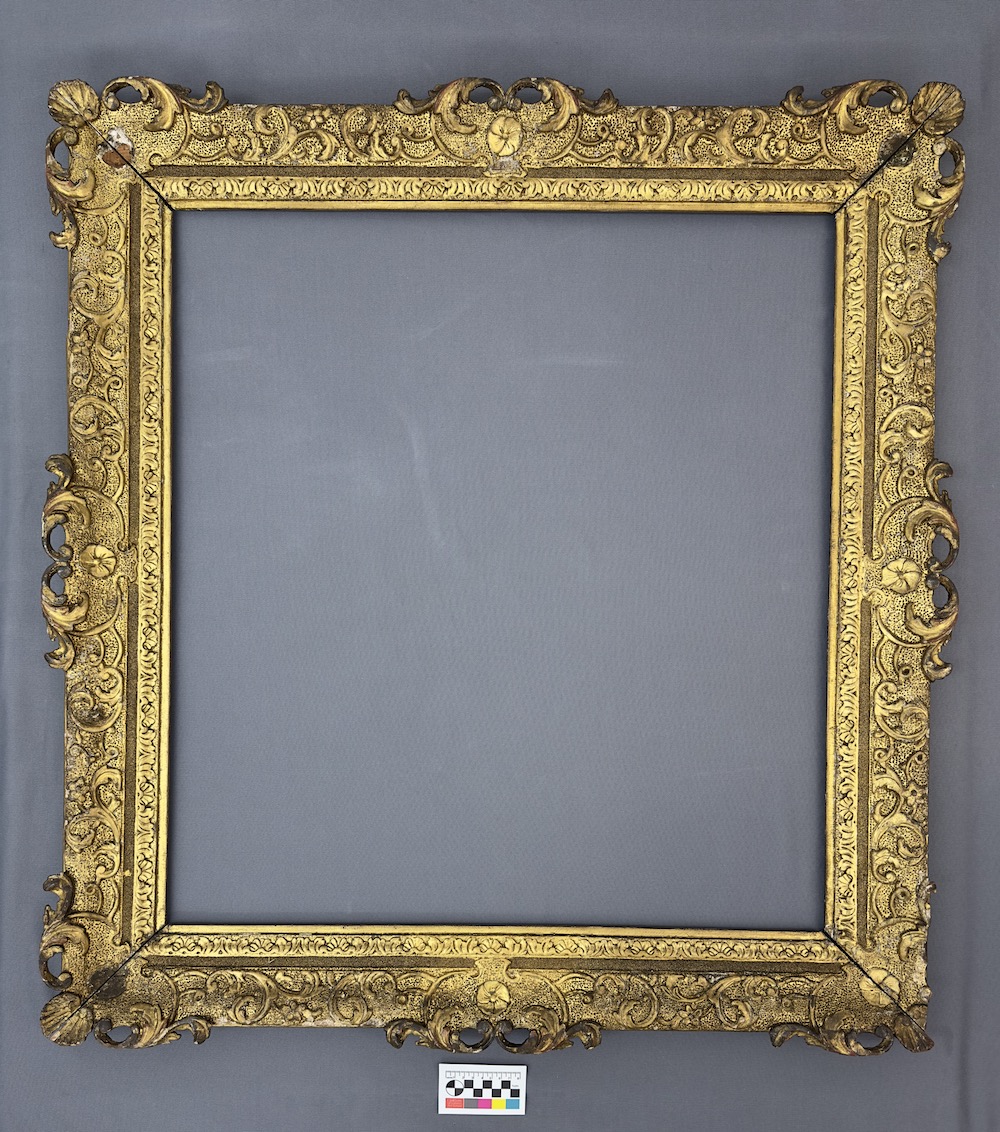
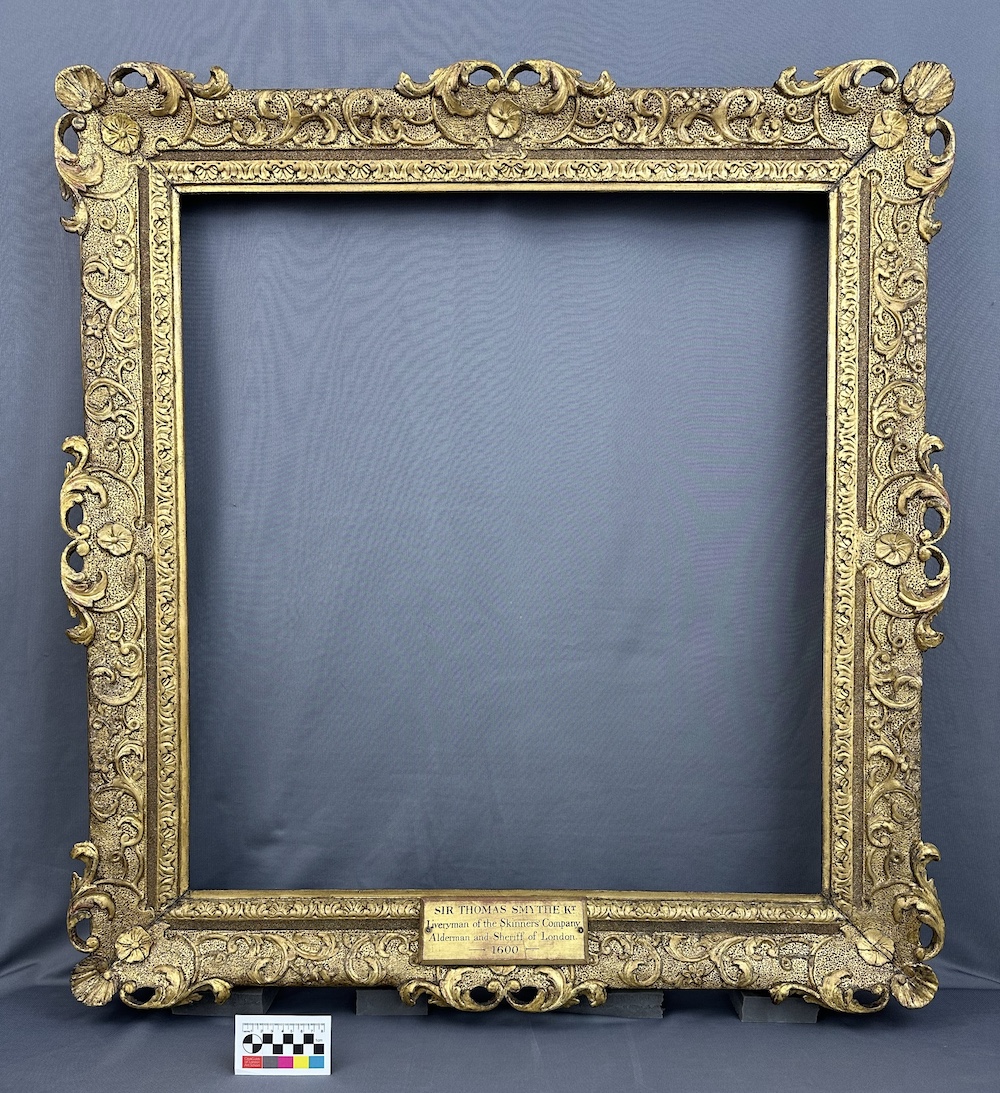
The frame was acquired by The Worshipful Company of Skinners on the 1st half or the 20th Century for the Portrait of Sir Thomas Smythe KT from c.1600, Liveryman of the Skinners’ Company, Alderman and Sheriff of London.
Condition Before Treatment
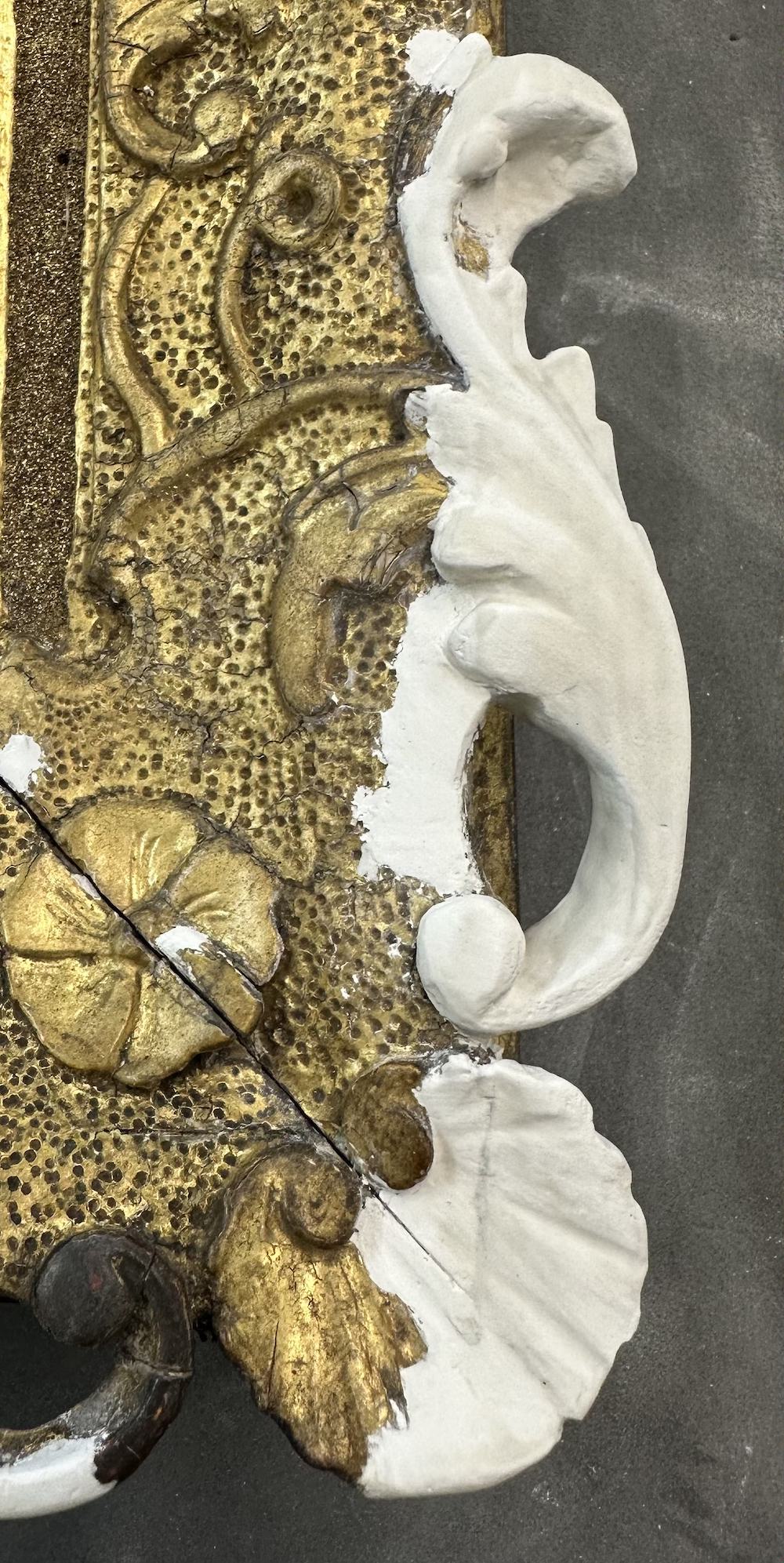
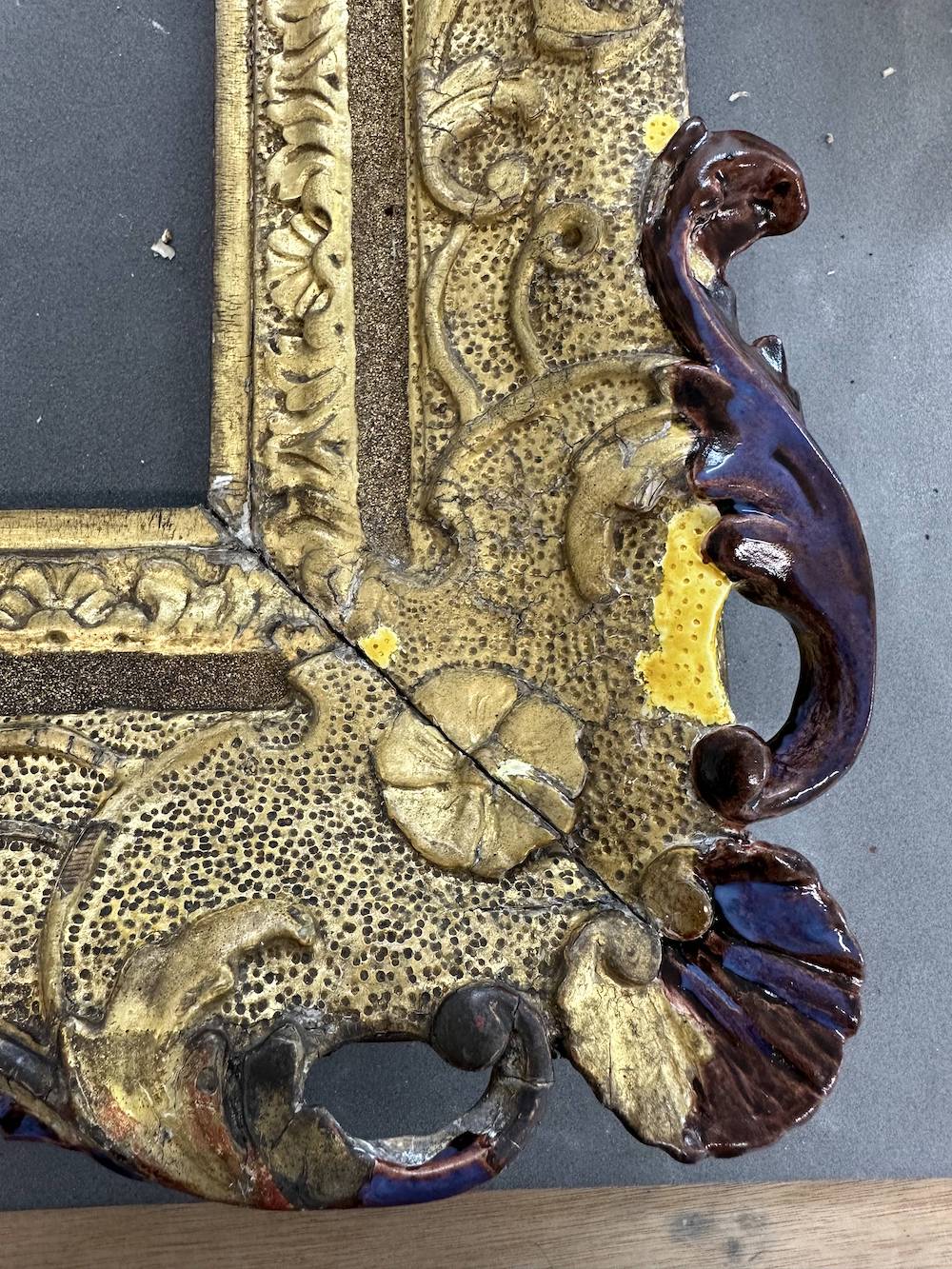
Structurally the frame was unstable, mitred joints with loose tapered dovetail keys. There was a split timber on left member showing a corroded nail. There were missing fragments on an acanthus leaf, and three rosettes. There were gesso losses all over the ornaments as well as lifting gesso. The bottom member showed darkened punch-work decoration. The historic labels were unprotected.
Treatment
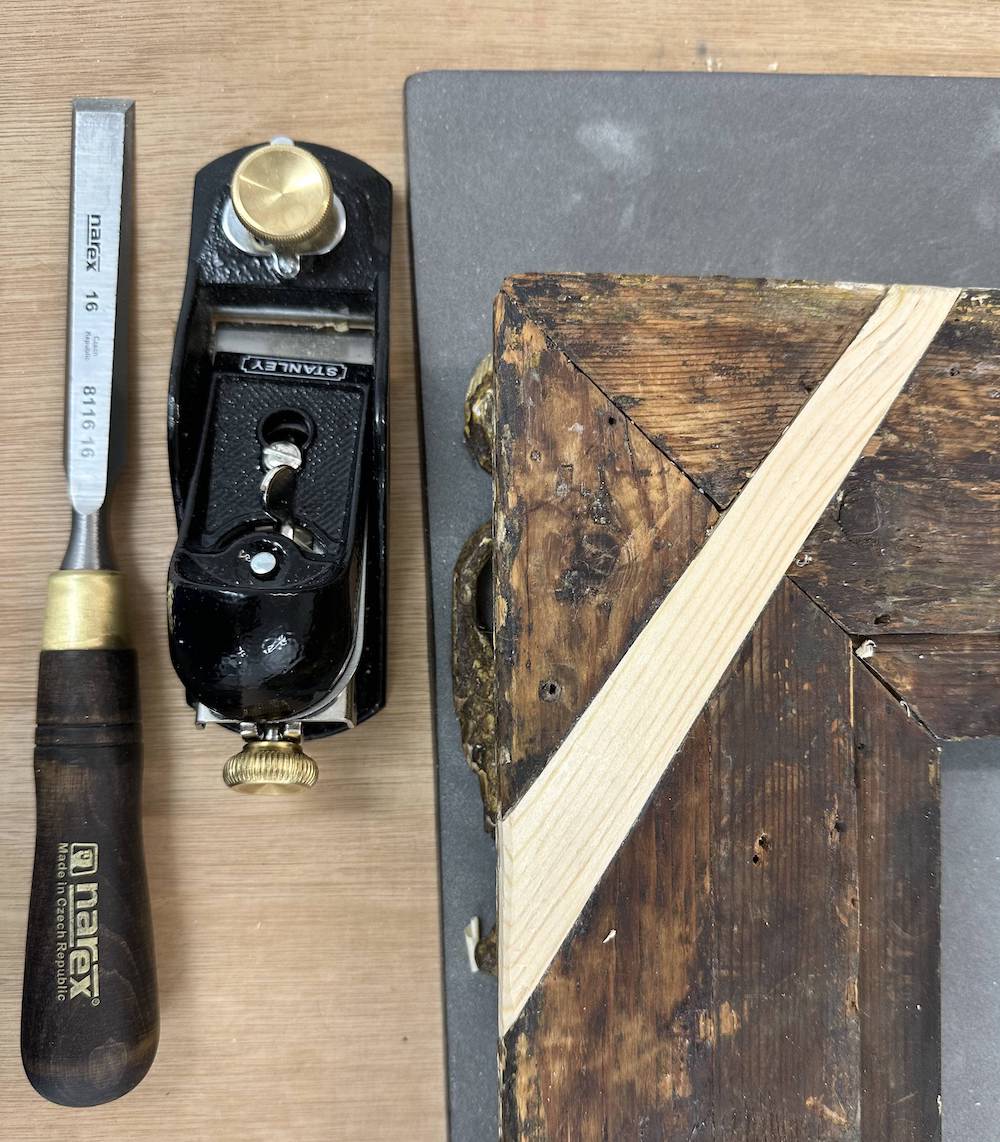
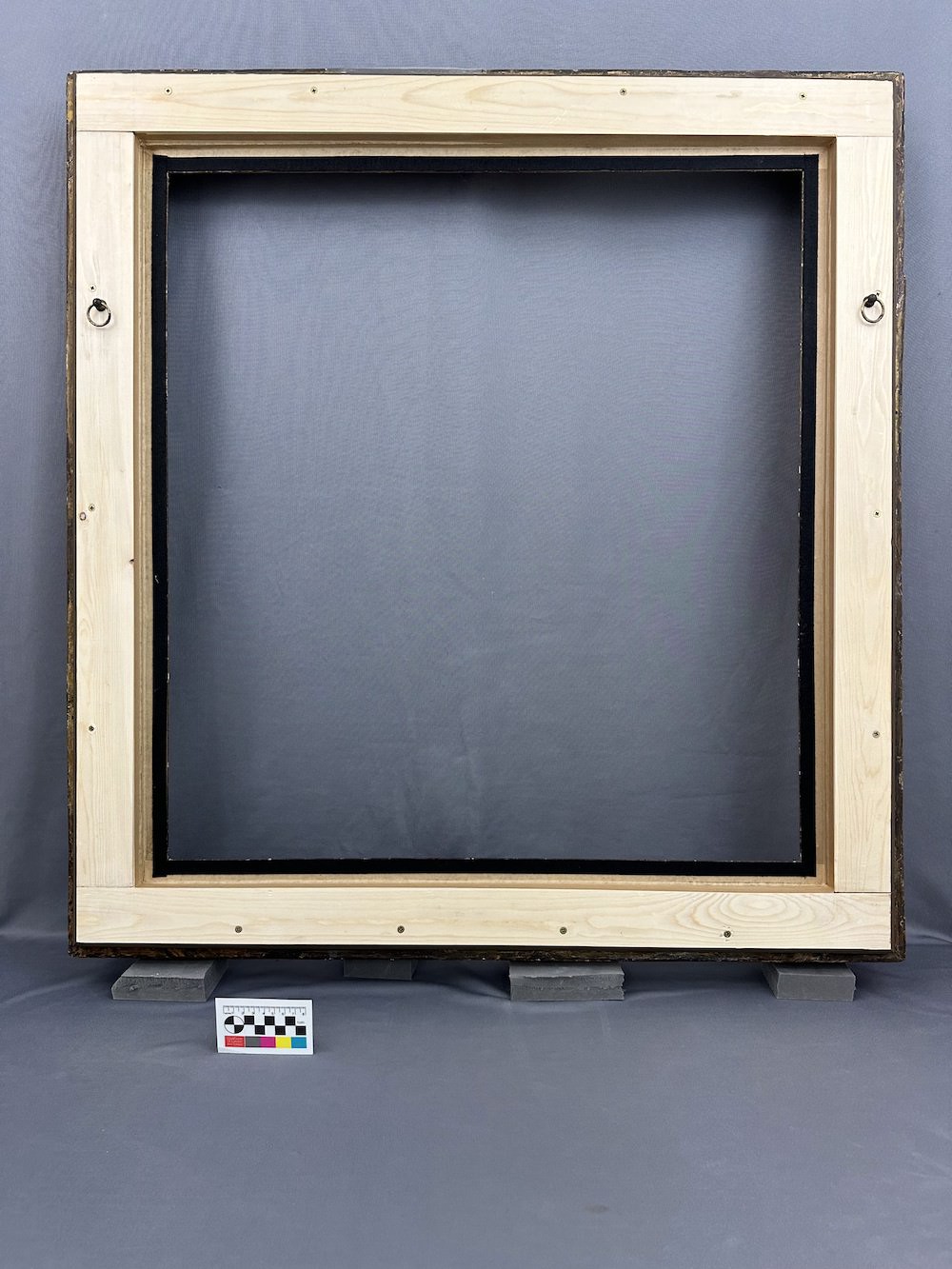
Four members were re assemble with tapered dovetail keys, one of which was replaced, and the other existing ones adjusted. A build-up was added using bridle joints to give the frame more stability. Split timber adhered with hide glue and nails cleaned and protected with Paraloid B72 in acetone. Labels were protected with Melinex. Bottom member cleaned with tri-ammonium citrate in deionized water.
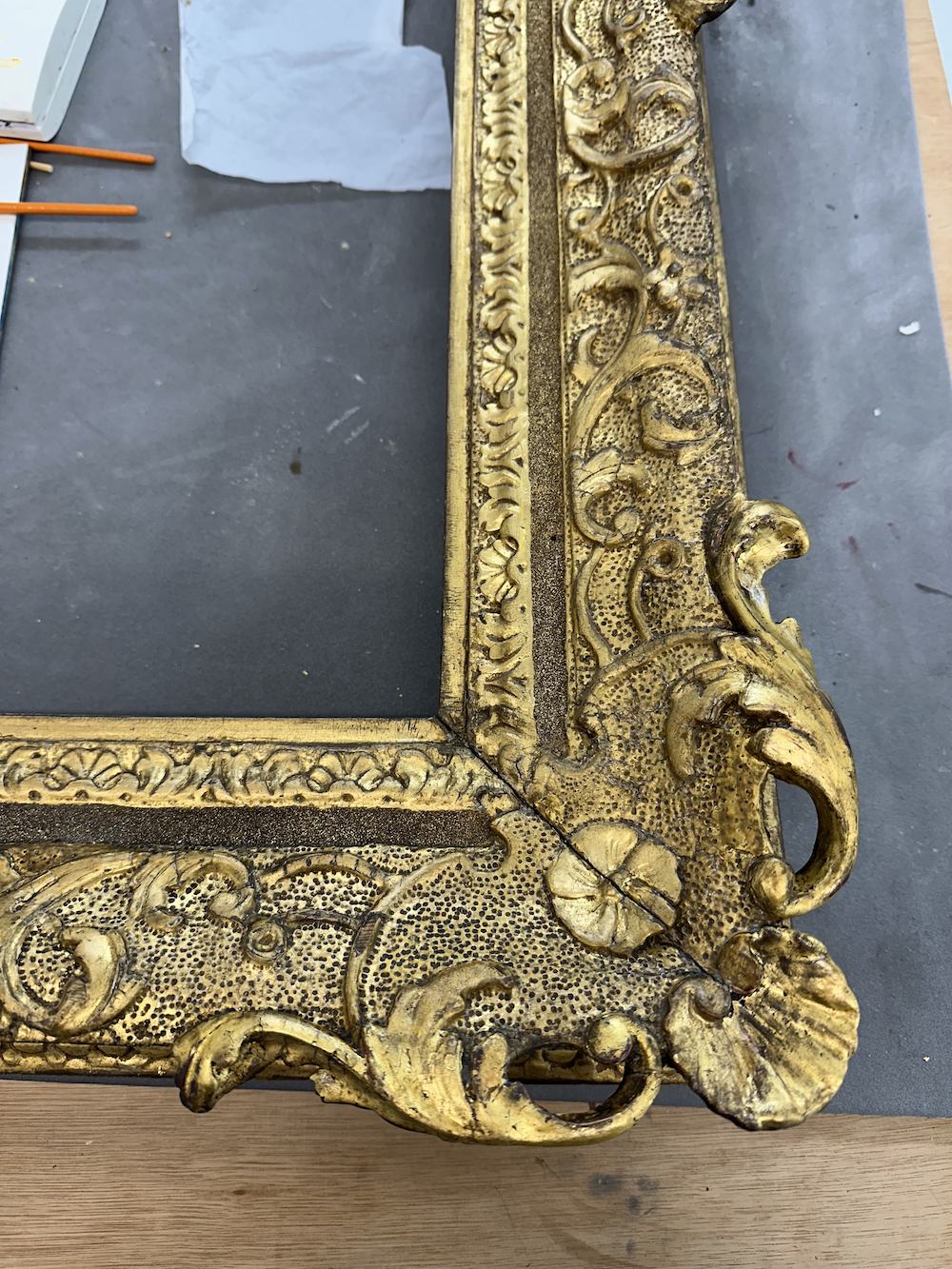
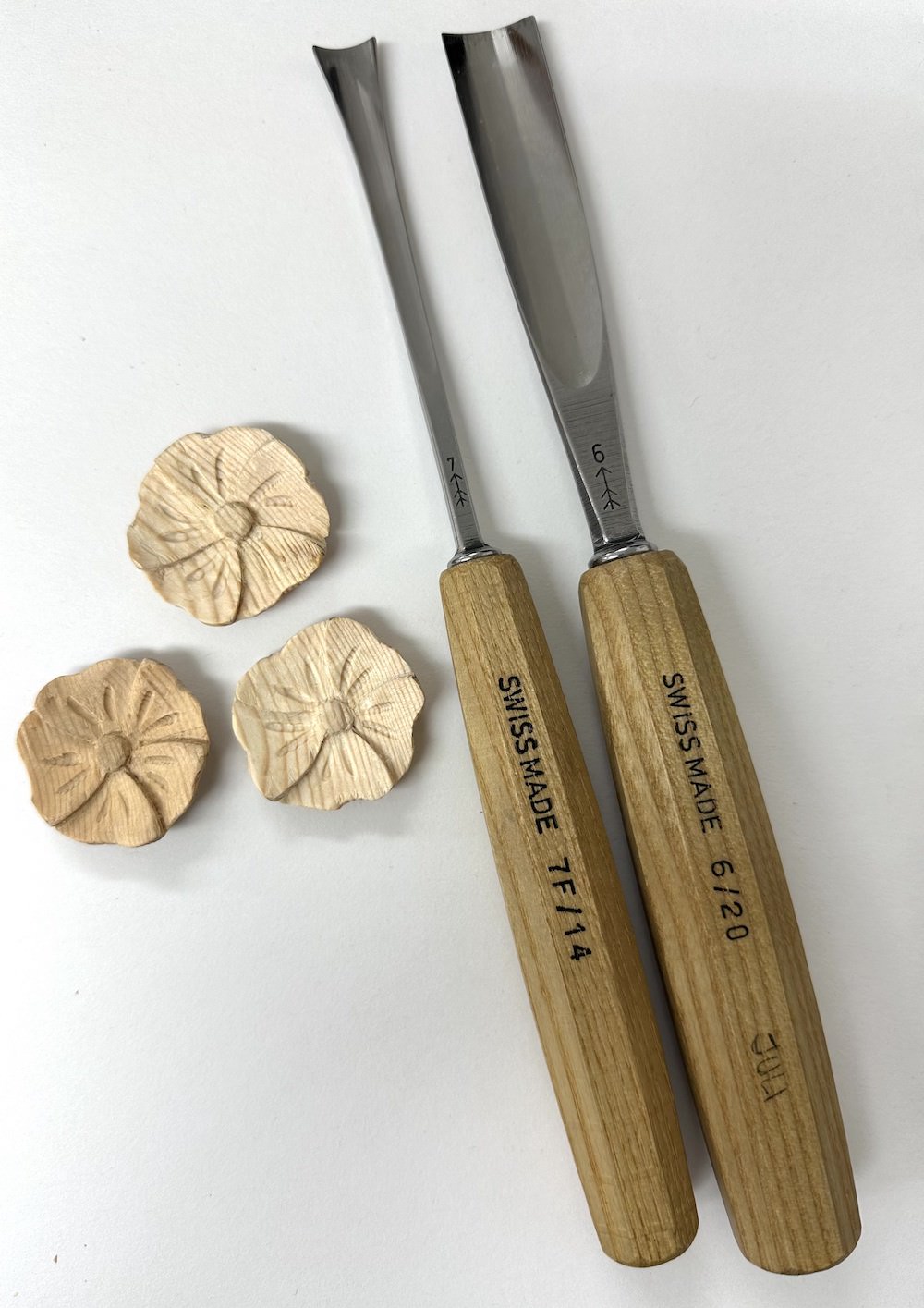
The missing acanthus leaf and shelf fragment were carved and adhered to the frame using Bencon 22. The three missing rosettes were also carved in pine wood and nailed to one side of the mitred joint.
Gesso putty was used to fill losses. To decorate the new additions a Dispersion K500 (acrylic dispersion) gilding method was chosen to make it discernible as well as reversible, differentiating it from the water gilding scheme available. This gilding method implies using the dispersion on the bole and later on the size water to apply the gold leaf.
The painting was re fitted at the client premisses. For that purpose, gummed and felt tape were added to the rebate. Wooden spacers were costumed cut to fit around the painting and brass strips screwed to secure the canvas. Melinex was used to cover the whole canvas and protect it from dust accumulation.
Image Gallery