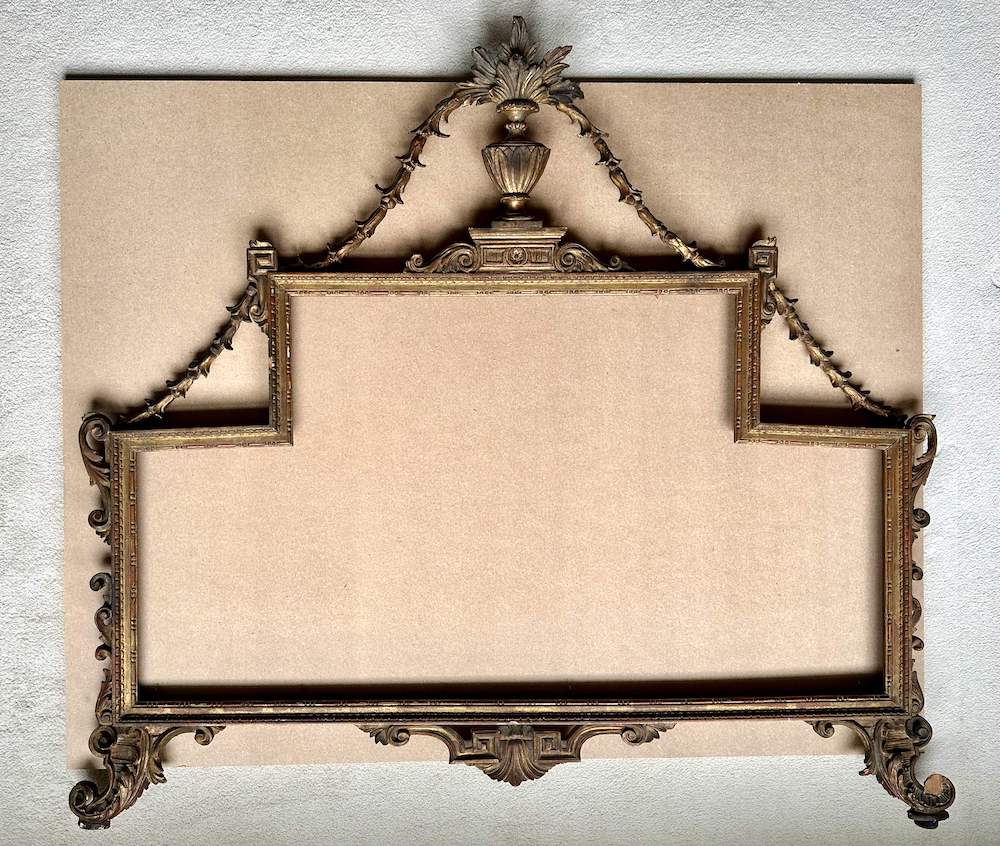
Mirror frame with swags
Category: Furniture

Introduction
This mirror frame, carved and water-gilt and likely from the early 19th century, belongs to a private collector. It contains three pieces of antique mirror glass, probably silver-backed and dating to the 19th century, with no evidence of mercury residues—suggesting it is not an older mercury mirror.
Condition Before Treatment
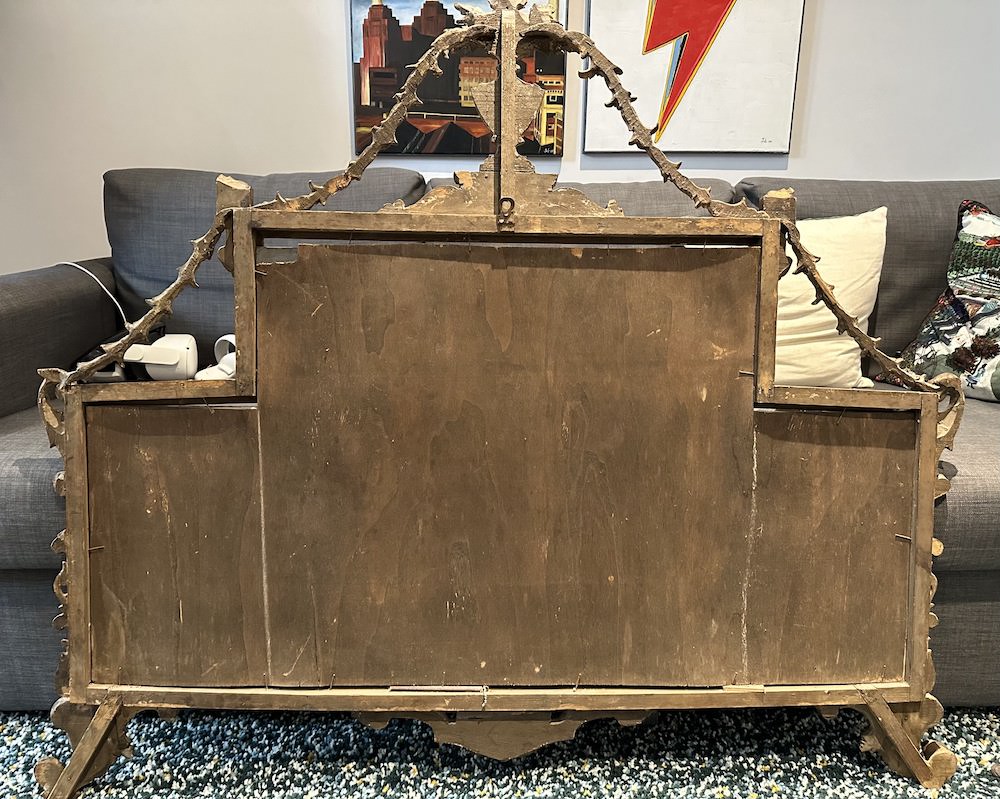
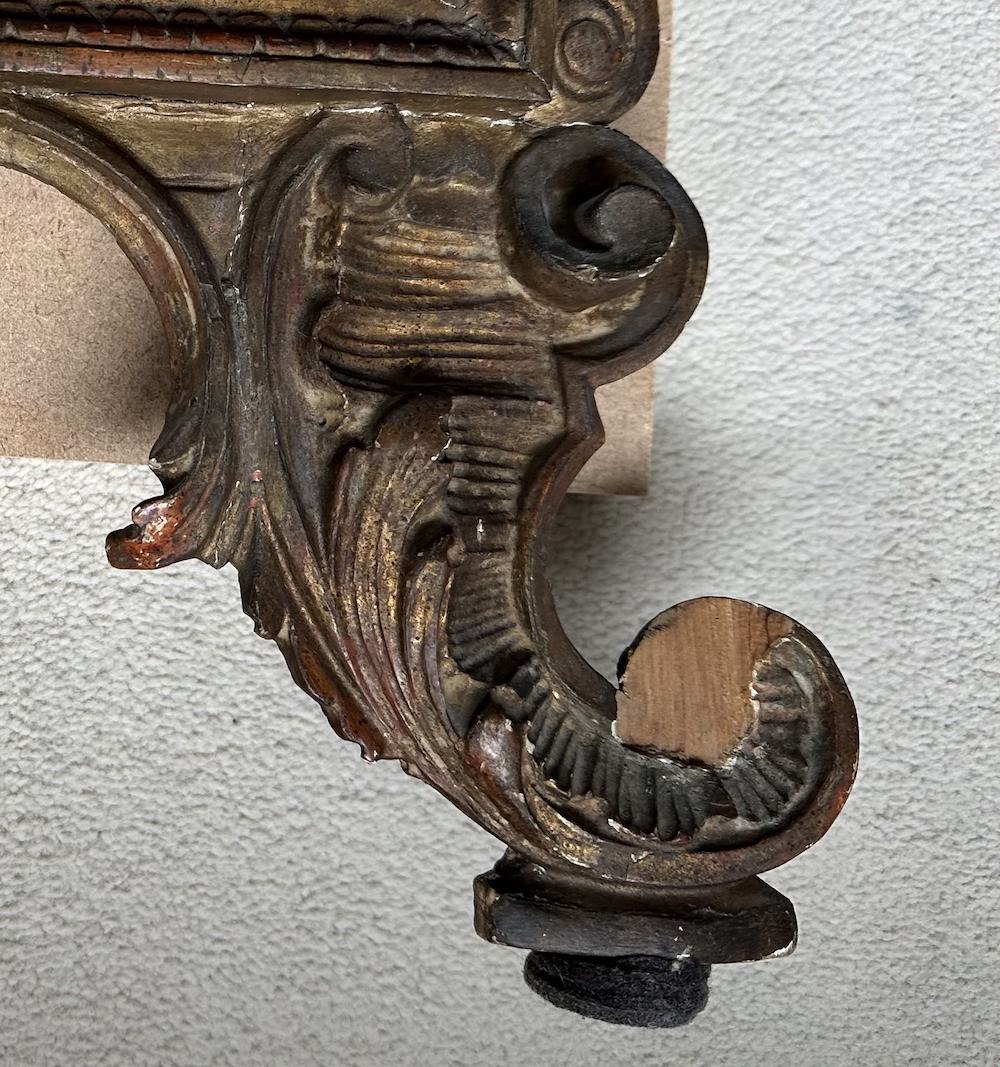
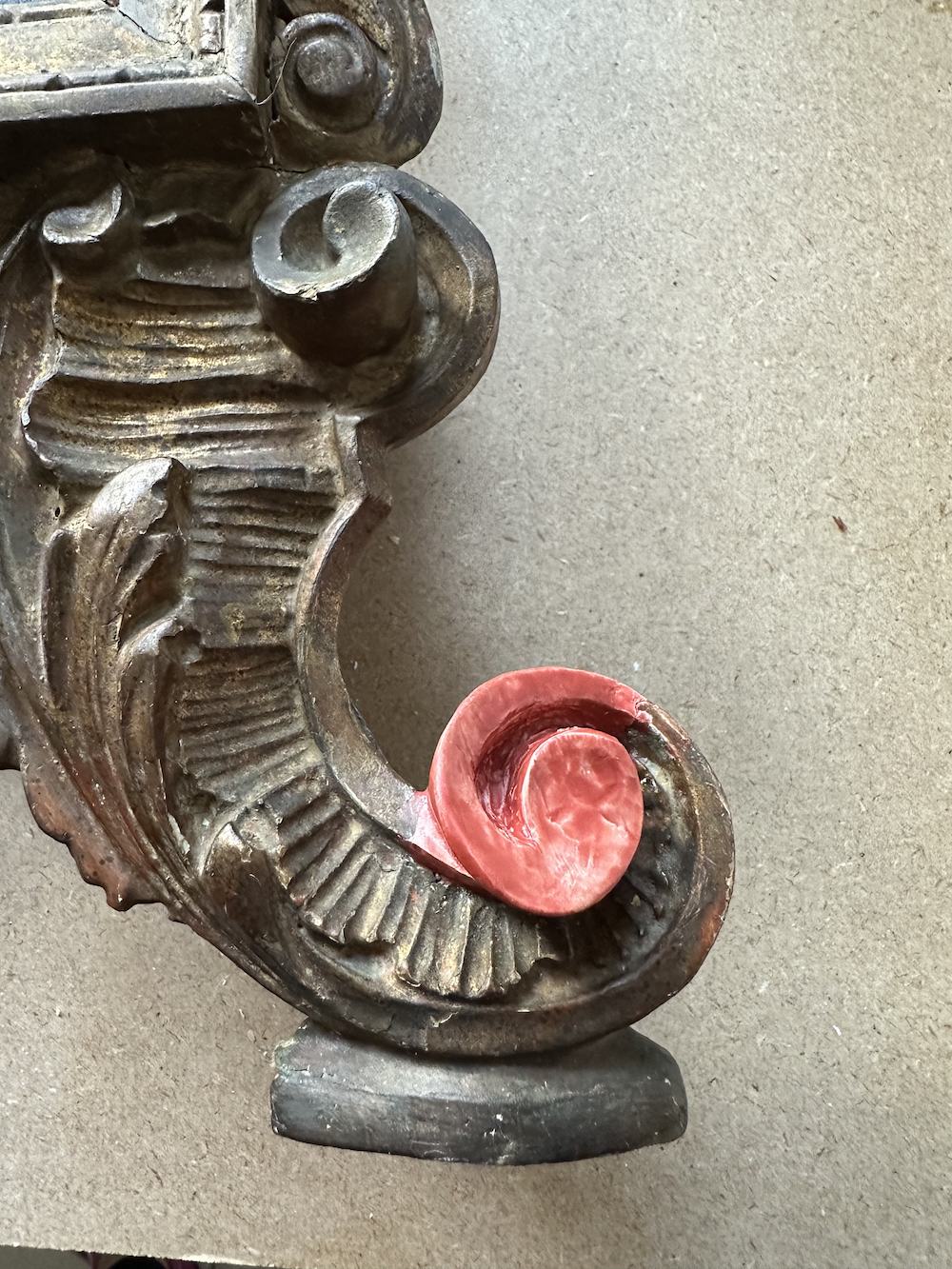
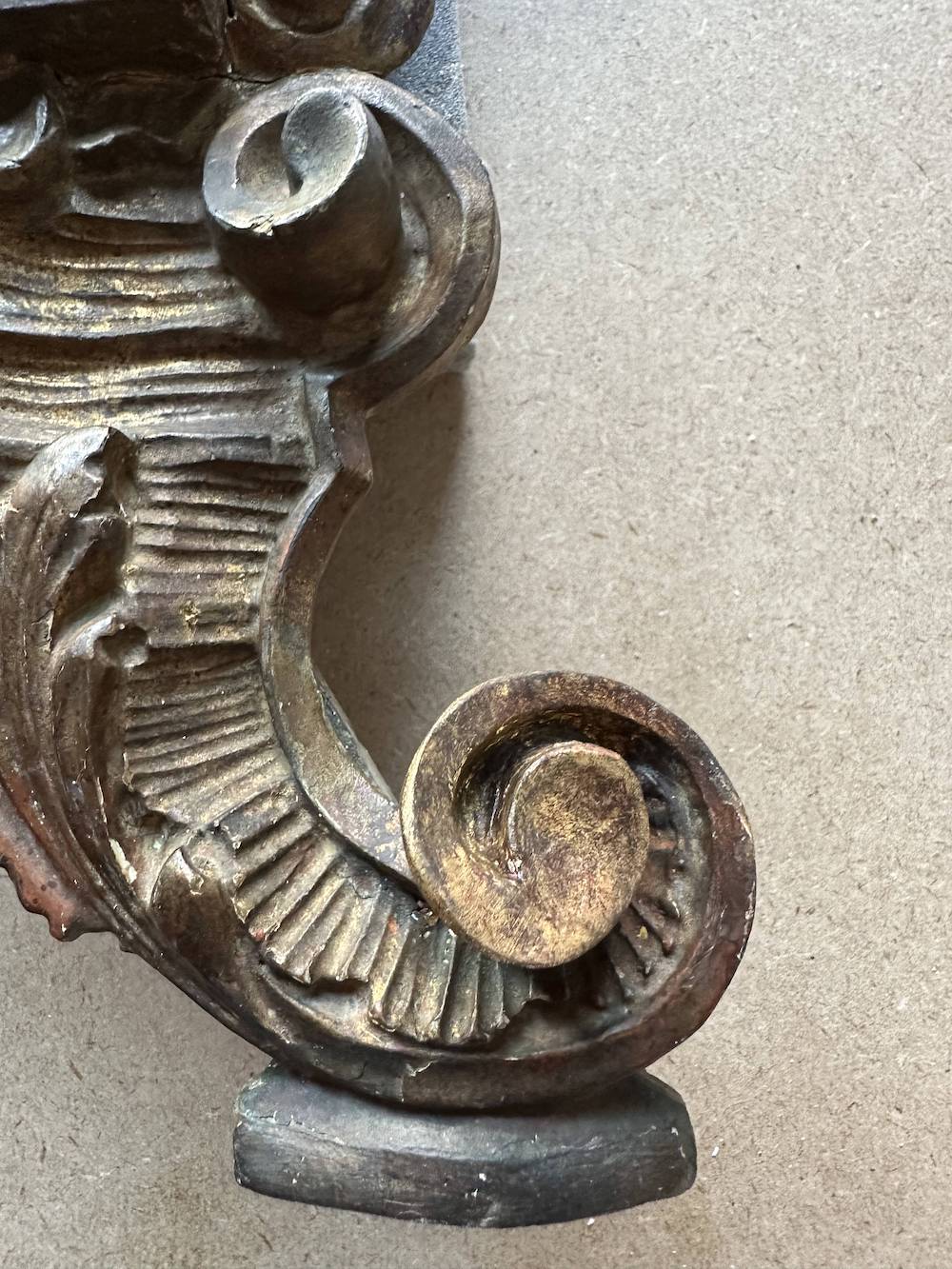
The entire top centre ornament was unstable, and the batten holding it from the back was loose. The top proper left foliage swag had a broken area and was semi-detached from the lower corner. The bottom proper left foliage swag was detached from the corner, with a visible nail on the side of the swag. The bottom proper right foliage swag showed evidence of a previous stable repair, with a glued batten securing a broken section. The proper right-side ornaments were slightly mobile, with a visible gap at the top. Both bottom ornaments were slightly loose; the proper left had a mobile mortise and tenon joint, while the proper right had a mobile batten. The remaining mortise and tenon joints were stable. The proper right bottom ornament had a missing fragment, and the proper left bottom ornament showed losses to the gesso layer. A layer of soiling covered the entire frame, with cobwebs and spider nests visible on the back. Minor gesso losses were present across the surface. The backboard was warped and too thin to offer adequate protection, held in place by corroded nails. Additionally, a gap was present between the top of the mirror and the top member of the frame.
Treatment
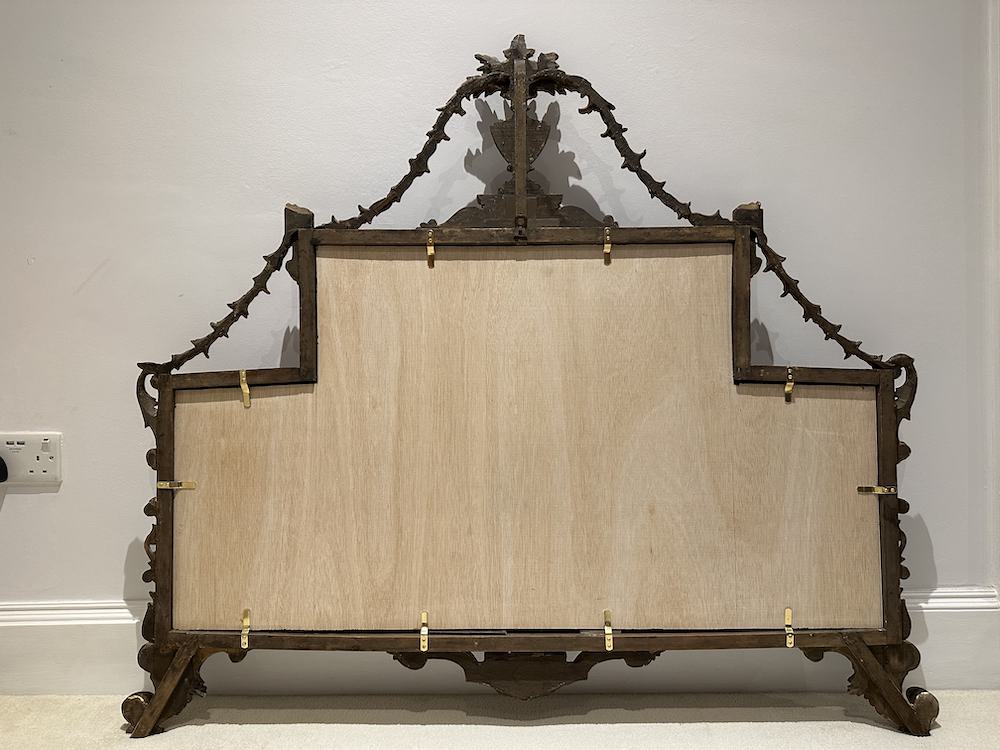
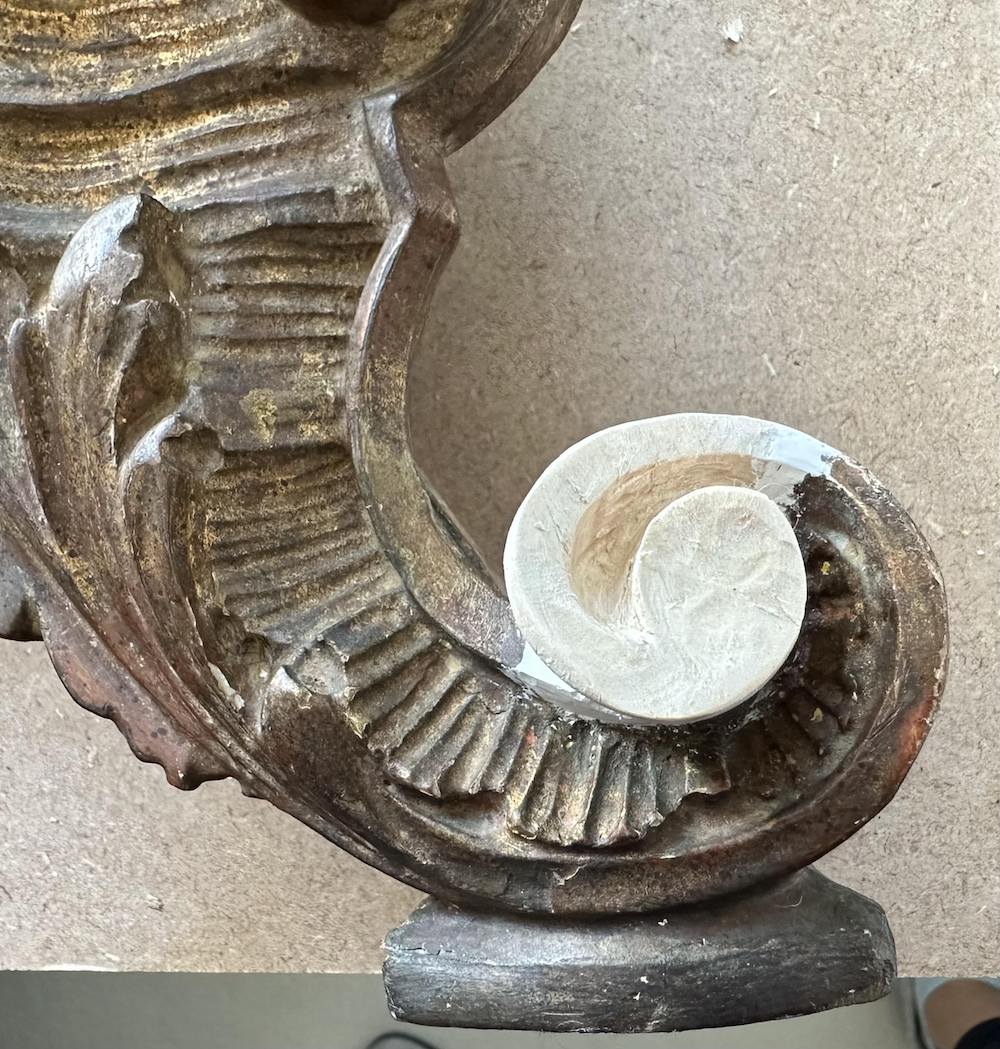
After testing several solvents (IMS alcohol, white spirit, acetone, and saliva), it was observed that the gold remained unaffected by all of them, suggesting the presence of a coating—possibly ormolu (shellac dissolved in alcohol). This coating had yellowed over time, giving the gold a darker tone. Following the cleaning, the soiling was removed, but the surface did not appear any brighter. A soft brush and vacuum cleaner were used to remove heavy dirt, particularly in the rebate area at the back. Flaking gesso was consolidated using rabbit skin glue at a 1:10 ratio in water. Gesso losses were filled with gesso putty made from whiting mixed with rabbit skin glue in the same ratio. Gilding was carried out using 23.5-carat Italian Manetti gold leaf, supplied by Gold Leaf Supplies. In-painting and toning were performed with watercolours and mica on the front, and acrylic paints on the back frame. Black felt tape was used to line the rebate and provide cushioning. Wooden spacers were adhered to secure the side mirrors. A new 5 mm plywood backboard was cut and attached using brass strips. Zinc strap hangers and zinc wall plates were provided to the client for hanging. Additional treatments included carving a missing fragment on the bottom proper left ornament in lime wood, which was adhered using Bencon 22 (epoxy resin) and sealed with hide glue to maintain reversibility. Battens were added to the top central ornament, and a slip of wood was inserted into the open joint. Additional battens were applied to the top swags. The proper left bottom swag was secured using balsa wood and covered with gesso putty. All loose elements, including the bottom swags and side ornaments, were glued in place.
Image Gallery