San Giorgio Maggiore Church – Venice
Category: Stone
Introduction
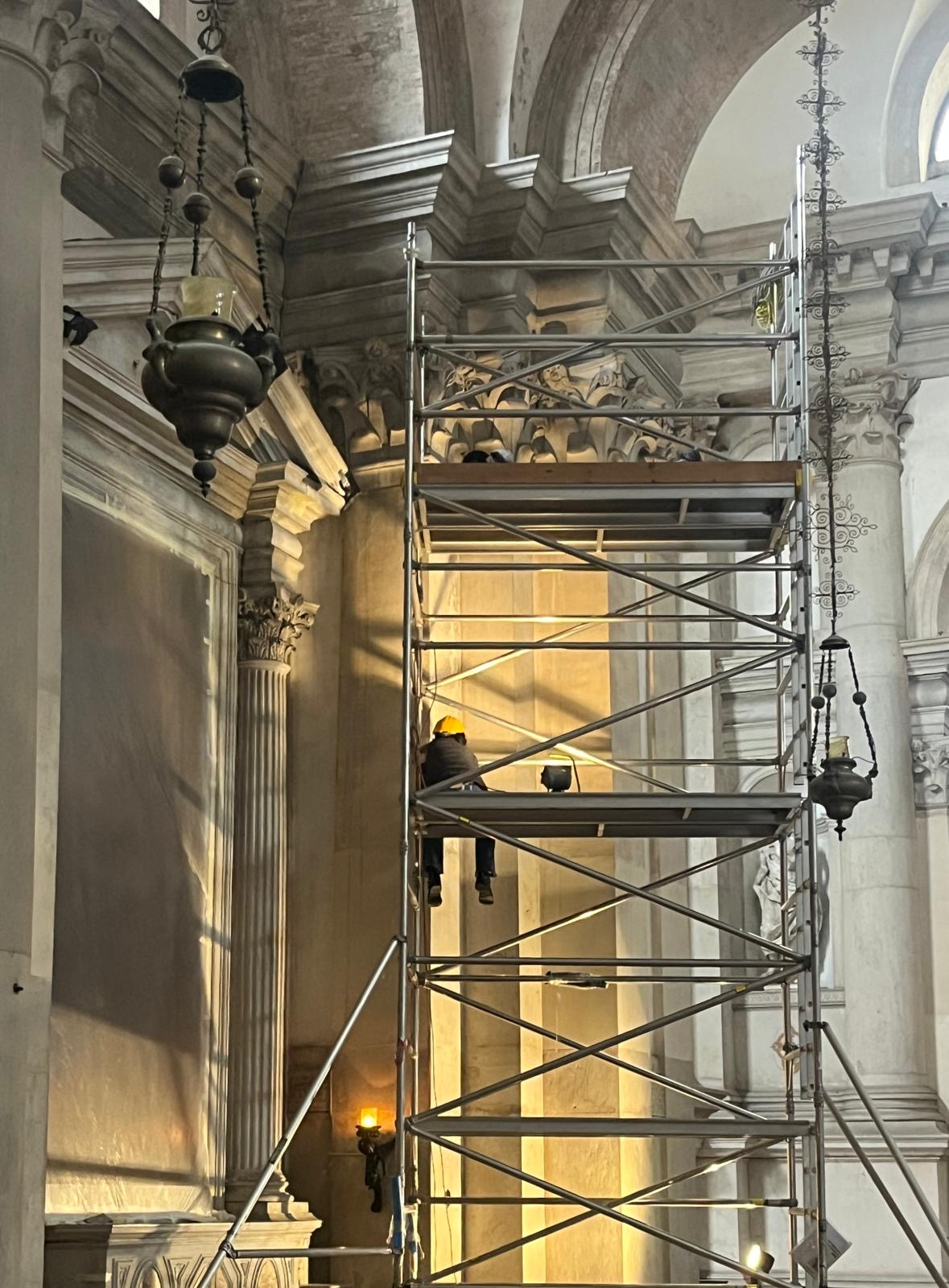
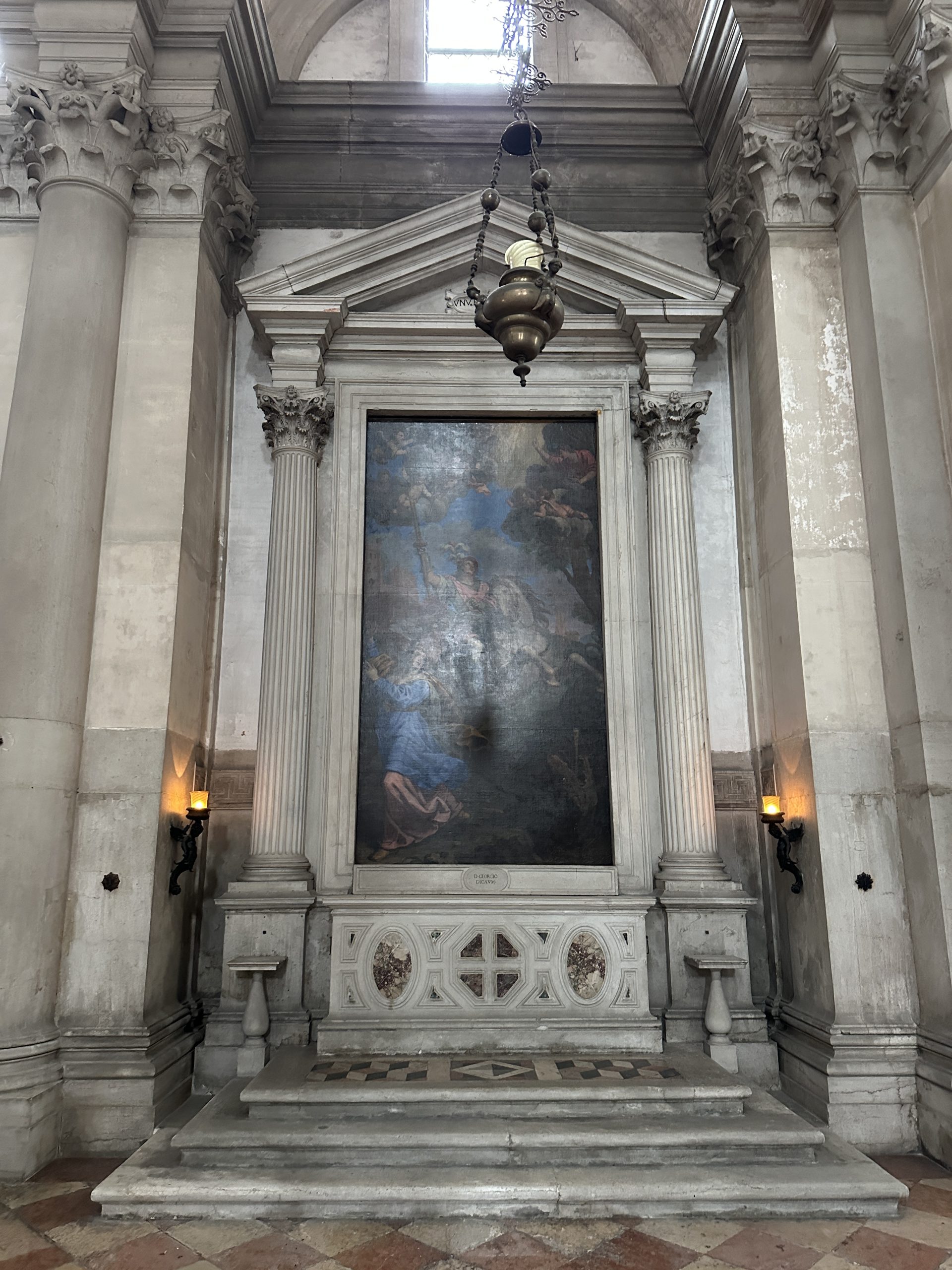
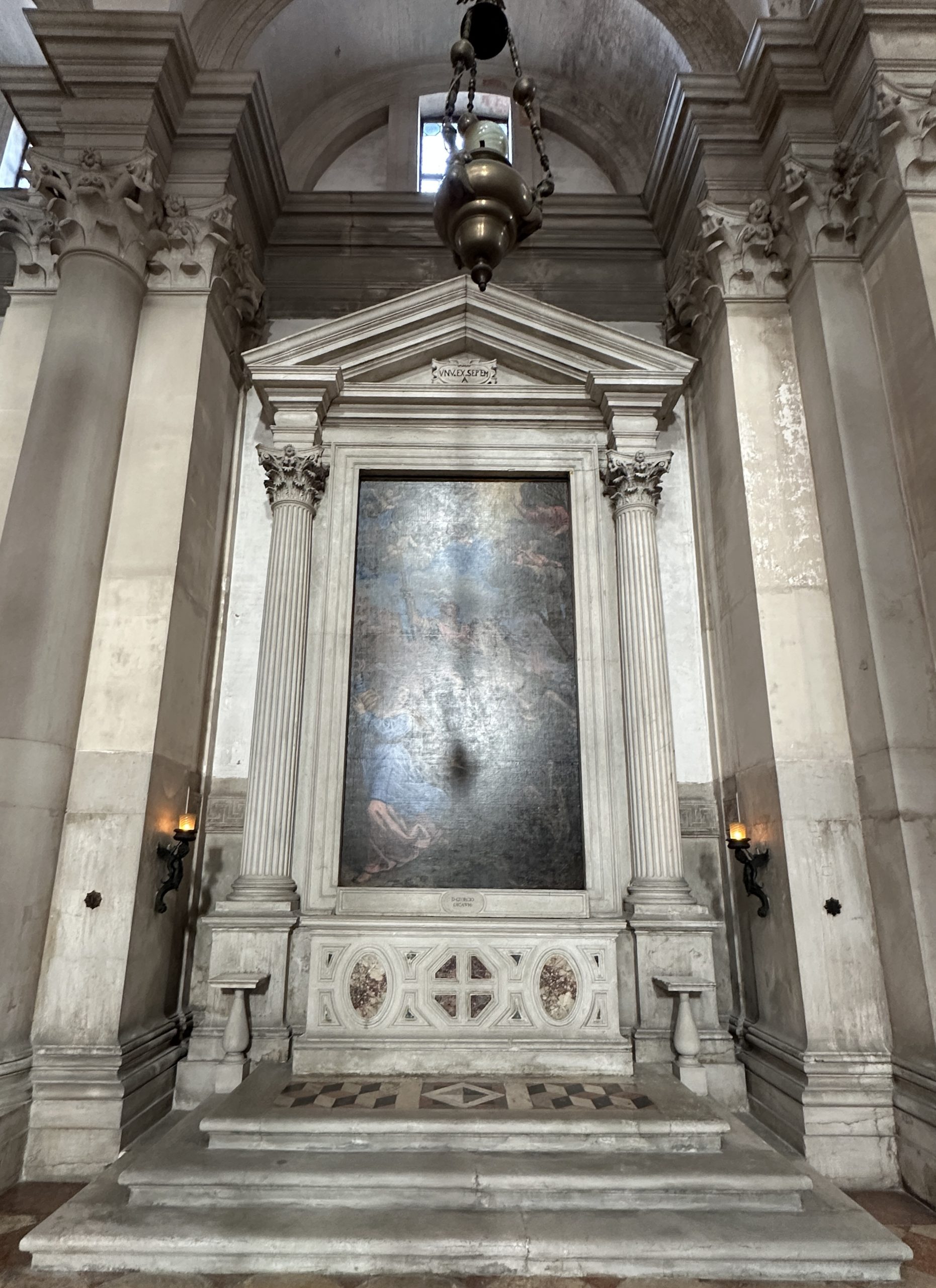
As part of the Venice in Peril internship, I spent ten weeks at the Church of San Giorgio Maggiore in Venice, Italy. Working in this Palladian church was an extraordinary privilege. Being in such a significant architectural setting every day shaped the way I approached conservation work. It was a unique opportunity to engage closely with the altar of San Giorgio, which was the main project I worked on.
Condition Before Treatment
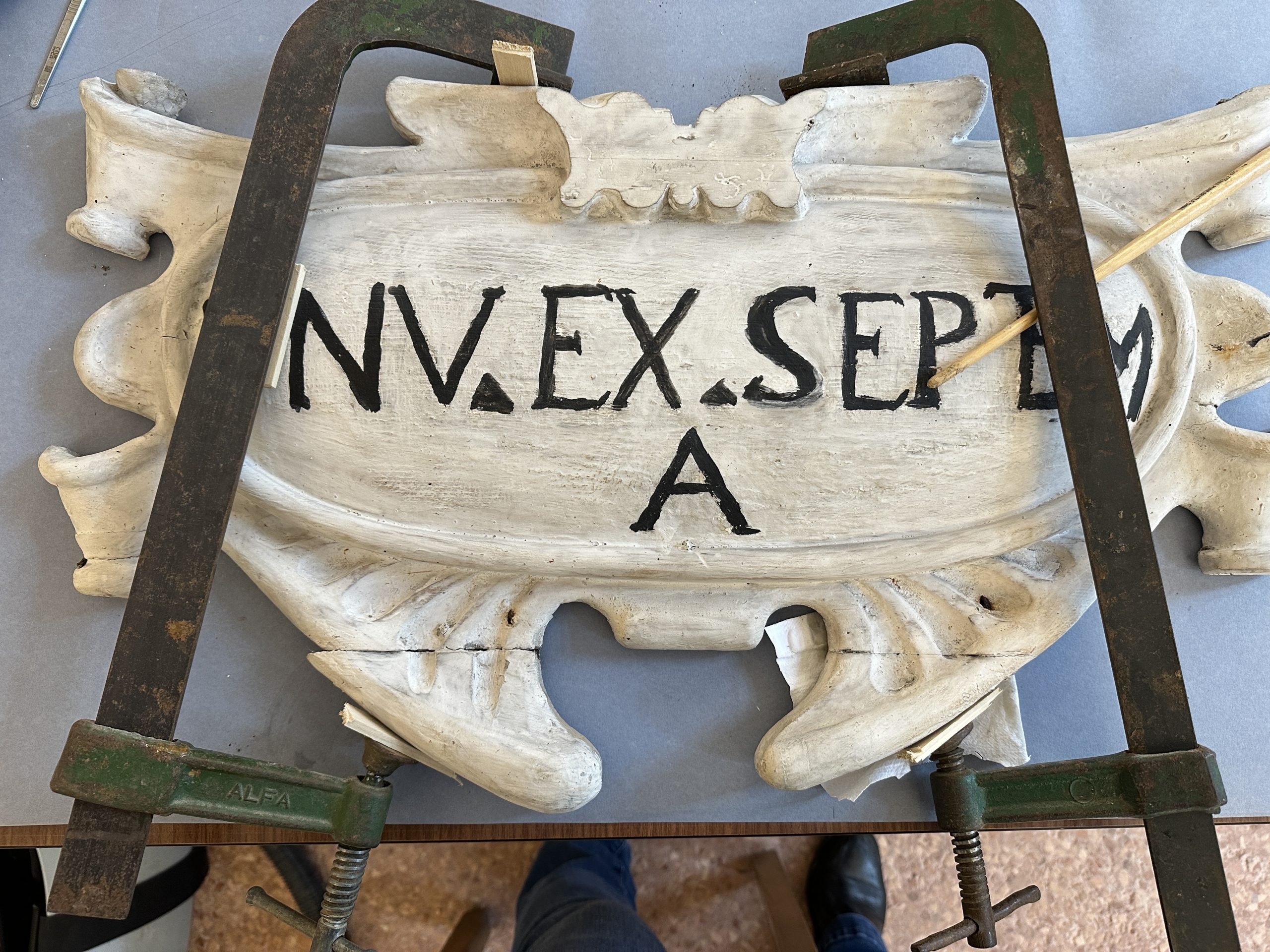
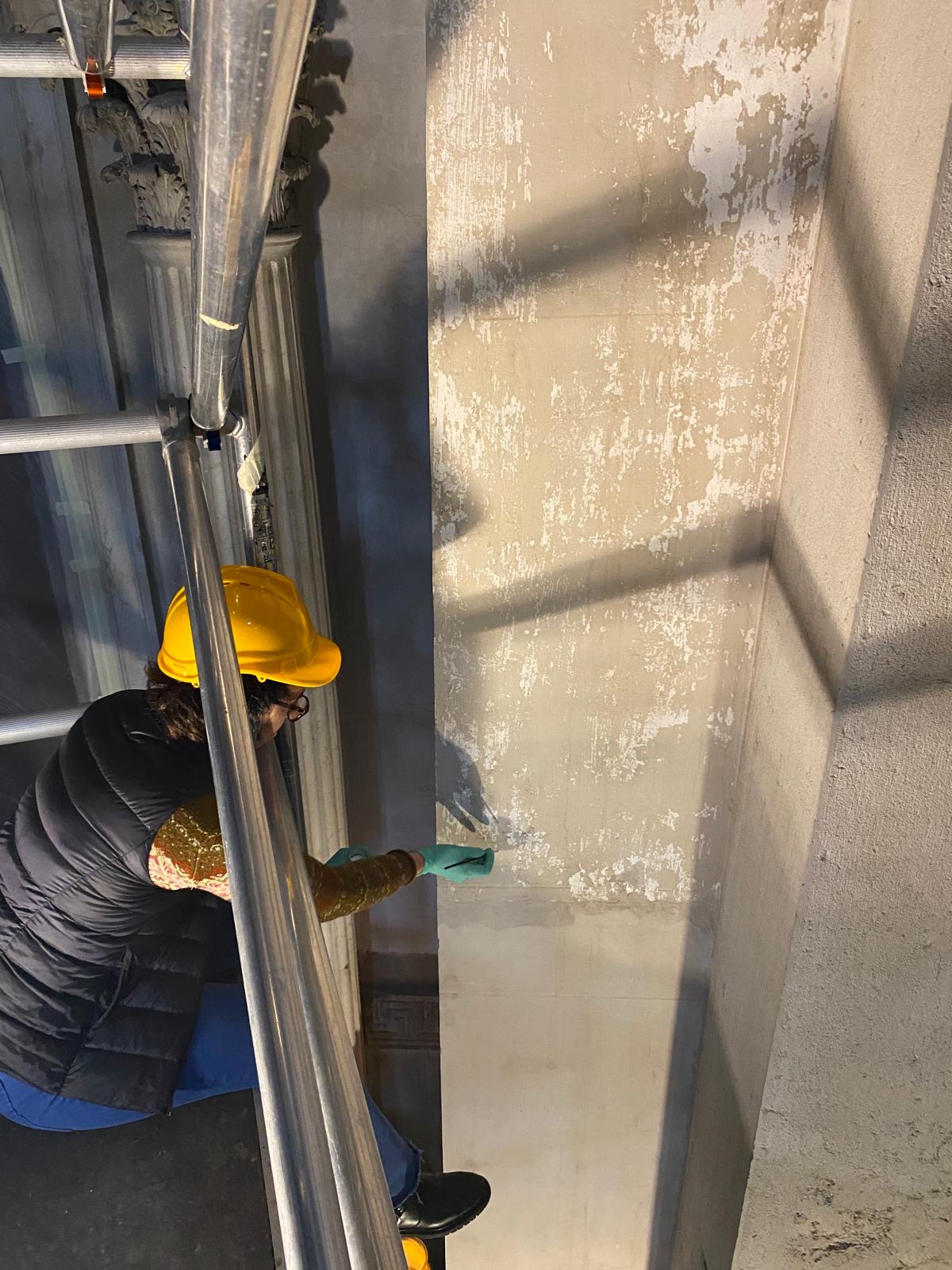
The altar showed heavy soiling, especially on the upper areas such as the pediment and capitals. Corroded and flaking armatures were visible on top of the pediment, with loose mortar debris surrounding them. The corners of the pediment showed cracks. The wooden cartouche was lying on the pediment, with a broken hook for hanging on the wall. Areas of the gesso were flaking, and the laminated lower section, containing corroded nails, was unstable. Some areas of the rendered pilasters on both sides of the altar were also flaking. The bronze sconces had wax deposits and exhibited verdigris corrosion. A detached fragment from the main altar was found near the steps. Additional accretions were visible on the altar, at the base of the columns, and on the floor near the steps.
Treatment
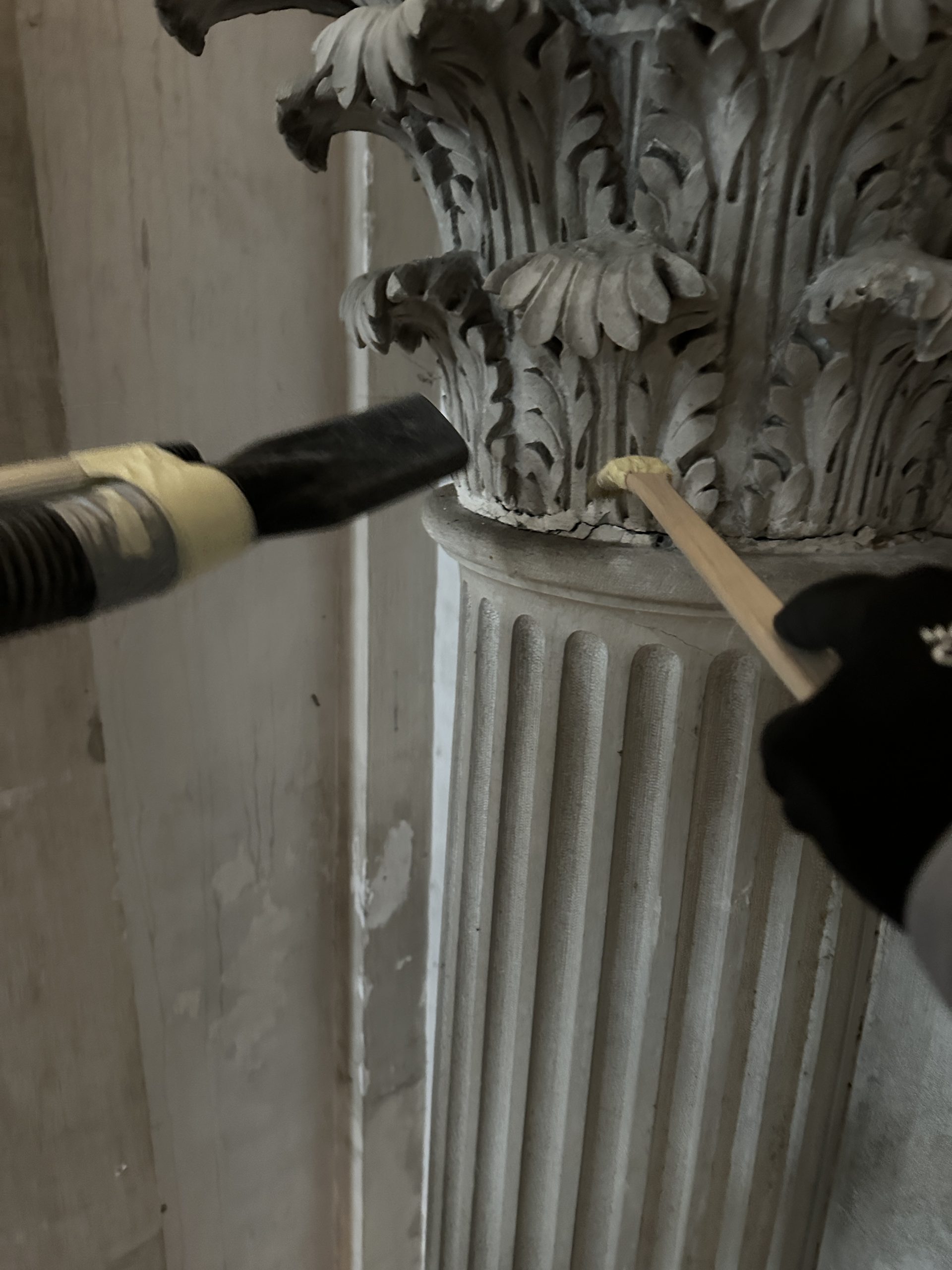
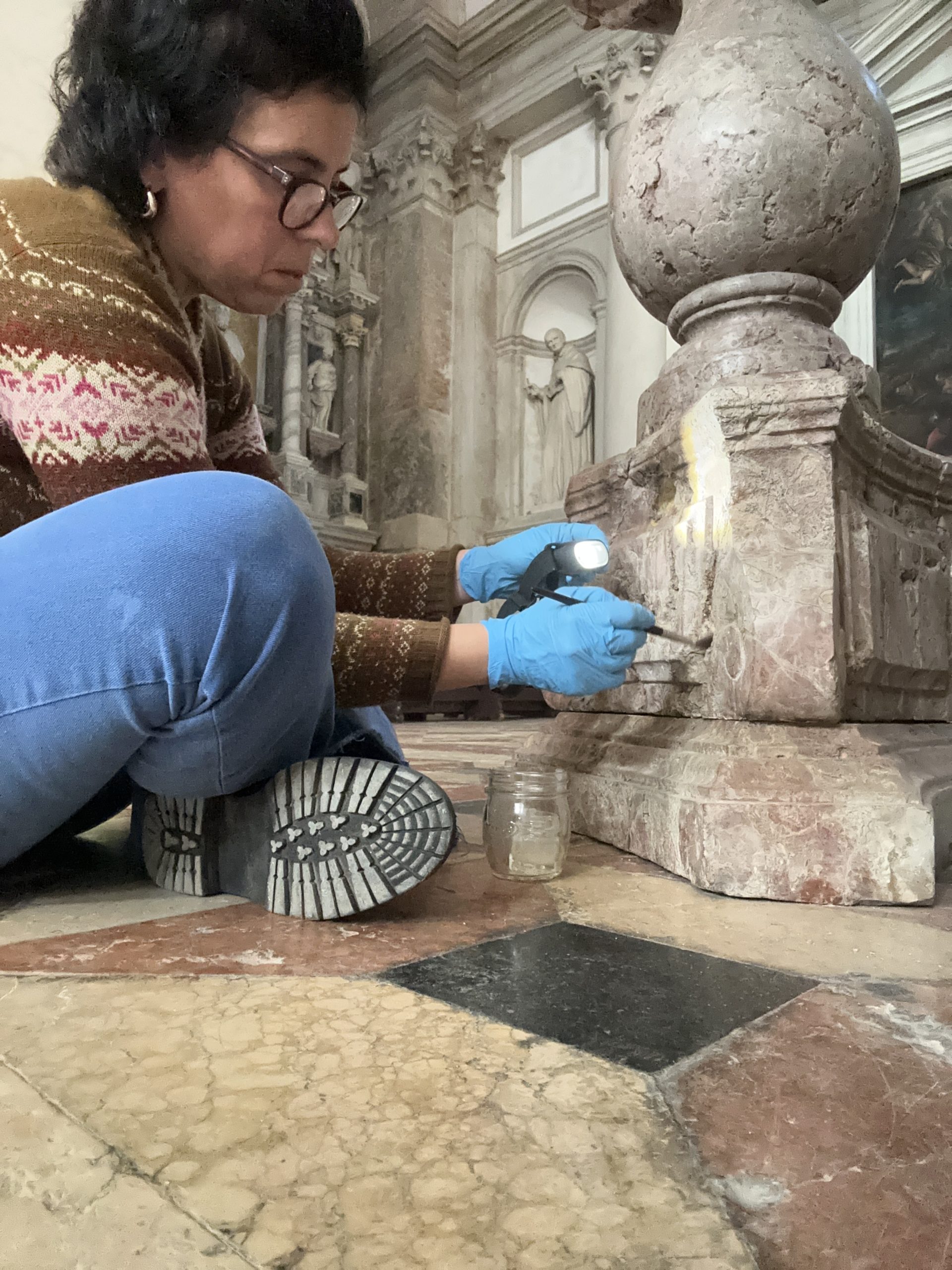
General dry cleaning was carried out using brushes and a vacuum cleaner, and debris was removed. The armature on top of the pediment was mechanically cleaned and protected with an anti-rust solution. The cracks at the corners of the pediment were filled with a lime-based mortar and subsequently retouched with acrylic paints. The hook for the cartouche was replaced with a metal one, inserted and secured with a lead filler. The cartouche was treated by consolidating the flaking gesso and re-adhering loose fragments. The flaking render on the pilasters was consolidated with a Primal solution. The sconces were cleaned with white spirit and protected with microcrystalline wax; wax deposits were mechanically removed using scalpels. The detached fragment of the altar was reattached using an epoxy resin.
Image Gallery